

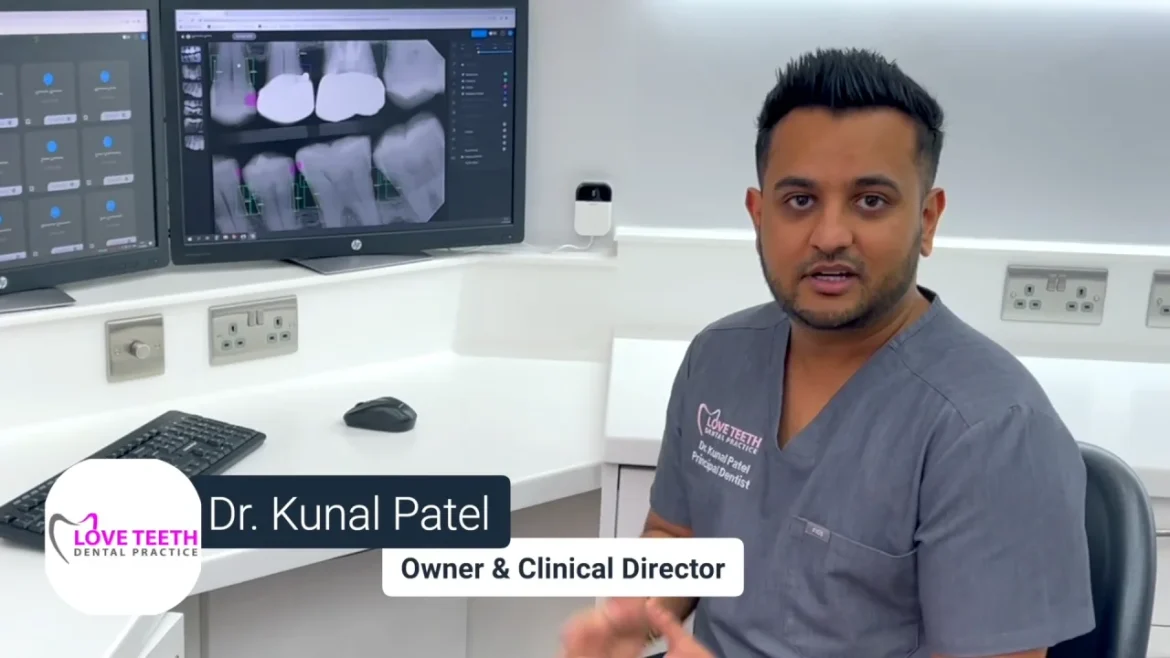
Let’s be honest. The traditional dental checkup, for all its necessity, can feel a bit… blunt. The explorer probe poking around, the squint at the X-ray on a backlit screen, the “hmm, we’ll watch that spot” verdict. It’s a system that’s served us well, but it’s fundamentally human-limited. What if we could see the unseen? What if we could catch tooth decay not when it’s a visible hole, but when it’s just a whisper of demineralization?
Well, that future is already in the chair. Artificial Intelligence is quietly transforming dentistry, moving us from reactive repair to truly preventive care. And the most exciting shift is happening right at the start: in spotting cavities early and planning treatment with almost prescient precision.
The Problem with “Watch and Wait”
Here’s the deal. Early-stage decay, especially between teeth or under the gumline, is notoriously tricky. On an X-ray, it might just be a faint shadow—open to interpretation. Two dentists might even disagree on what they’re seeing. This ambiguity leads to a couple of common pain points.
First, cavities can be missed until they’re larger and more costly to fix. Second, and just as frustrating, is the potential for overtreatment. No one wants a filling on a tooth that might have re-mineralized with better hygiene. AI steps in as a powerful, objective second opinion.
How AI Sees What We Can’t
Think of AI in dentistry not as a robot dentist, but as a super-powered assistant with incredible pattern recognition. It’s been trained on hundreds of thousands, even millions, of dental images—X-rays, intraoral scans, clinical photos. It’s seen every stage of decay imaginable.
So, when your new bitewing X-ray is uploaded, the AI doesn’t just look at it. It analyzes it. Pixel by pixel. It compares the subtle shades of grey in your enamel to its vast database. It can flag areas of demineralization that are literally invisible to the human eye, highlighting them for your dentist to review. It’s like having a detective with a magnifying glass for every single tooth.
The Tech in the Trenches: AI-Powered Detection Tools
This isn’t just lab talk. Several AI platforms are already integrated into dental software. They work in real-time:
- Automated Caries Detection: Software like Dental Monitoring or Overjet analyzes radiographs and outlines potential cavities with color-coded boxes. It gives a probability score, say, “92% likelihood of early interproximal caries on tooth #4.”
- Longitudinal Analysis: This is the real game-changer. AI can compare your X-ray today with one from two years ago. It measures changes in enamel density with insane accuracy, showing exactly if and how a “watch” spot has progressed. No more guessing.
- Intraoral Scan Analysis: Even the 3D scans from your checkup can be screened. AI algorithms can detect early occlusal (biting surface) pits and fissures that are at high risk, guiding preventive sealants perfectly.
From Detection to Blueprint: AI in Treatment Planning
Okay, so AI finds a tiny lesion. What then? This is where it gets even cooler. AI doesn’t just ring an alarm bell; it helps map the path forward. This is the core of AI-driven dental treatment planning.
For starters, it brings a new level of consistency. The software can help classify the cavity stage using standardized systems (like the ICDAS). This means your treatment plan is based on a globally recognized scale, not just one dentist’s instinct.
But let’s talk about the actual plan. For a confirmed cavity, AI-assisted design software can virtually prepare the tooth. It suggests the minimally invasive preparation needed—preserving as much healthy tooth structure as humanly (or, well, artificially) possible. It can even pre-design a restoration that fits the exact digital contour of your tooth, streamlining the process for same-day crowns or inlays.
| Traditional Approach | AI-Enhanced Approach |
| Visual & tactile exam | Algorithmic analysis of radiographic data |
| Subjective interpretation of X-rays | Objective, quantified risk assessment |
| Standardized preparation sizes | Personalized, minimally invasive prep guides |
| “Watch and wait” with uncertainty | Monitor microscopic changes over time |
The Human Touch in the Age of AI
Now, a crucial point. This isn’t about replacing your dentist. Not even close. It’s about augmenting their expertise. The AI provides data—incredibly detailed, objective data. But your dentist provides the context, the clinical judgment, the conversation with you.
Imagine this scenario. The AI highlights a potential area on your X-ray. Your dentist zooms in, correlates it with what they see in your mouth, considers your diet, your hygiene habits, your overall health. Then, together, you make a decision. Maybe it’s “let’s apply a high-fluoride varnish and re-check in 6 months.” Maybe it’s a tiny, precise filling. The decision is informed, confident, and personalized.
That’s the synergy. The AI handles the superhuman task of scanning millions of data points. The dentist handles the profoundly human tasks of empathy, communication, and holistic care.
What This Means for You in the Chair
So, practically speaking, what changes? For one, earlier interventions. Catching decay at its earliest stage often means no needle, no drill—just enhanced preventive measures. That’s a win.
It also means more predictable outcomes and, honestly, less anxiety. When your dentist shows you a side-by-side comparison of your X-rays with clear, AI-generated markers, the treatment plan just makes sense. You’re both looking at the same evidence.
And in the long run? This focus on early cavity detection with AI could fundamentally shift dental care from a repair model to a true health-preservation model. Fewer big procedures, healthier natural teeth for longer, and potentially lower costs over a lifetime.
The next time you’re at the dentist and they mention an AI analysis, you’ll know. It’s not about robots. It’s about clarity. It’s about turning the faint, worrying shadows into clear, actionable information. It’s about preserving your smile, one barely-there cavity at a time.
